Shop Your Closet: How to Make New Outfits From What You Own
To shop your closet, treat your own clothes like a store you have not visited in a while. Pull out the pieces you rarely wear, pick one, and build three different outfits around it using the basics you already love. Then make more outfits by swapping one piece at a time, and change the feel of each one with layers and accessories. One forgotten piece usually turns into four or five new outfits, and nothing new comes into the house.
Here is the method step by step, with a real example built around one dress.
The short version: (1) pull out the pieces you skip, (2) pick one and build three looks around it, (3) swap one piece at a time to get more, (4) re-style with layers and accessories, (5) let a shuffle suggest combinations you would not think of, (6) wear the new outfits and keep count.
What "shop your closet" means
Shopping your closet means looking for new outfits in clothes you already own instead of in a store. Most closets have a small group of pieces that get worn all the time and a larger group that hangs there: the dress you bought for one wedding, the trousers that only go with one top, the sweater you forget is in the drawer.
The goal is not to own less or to follow a challenge. It is to get the forgotten pieces into real outfits, so the closet you have feels bigger. If you want to go further and cut your closet down to a small set for the season, our guide on how to build a capsule wardrobe covers that.
Step 1: Pull out the pieces you skip
Go through your closet and take out everything you have not worn in the last couple of months, apart from clothes for another season and special events. Lay them on the bed. This is your shopping rail.
For each piece, finish this sentence: "I don't wear it because..." The answer is usually one of these:
- I have nothing to wear it with. This is the most common one, and the one this method fixes.
- I only see it as one outfit. The floral dress is "the wedding dress", the blazer is "the interview blazer".
- It feels too dressy or too casual for my normal days.
- It does not fit or needs a repair. Put these in a separate pile; no outfit will fix them.
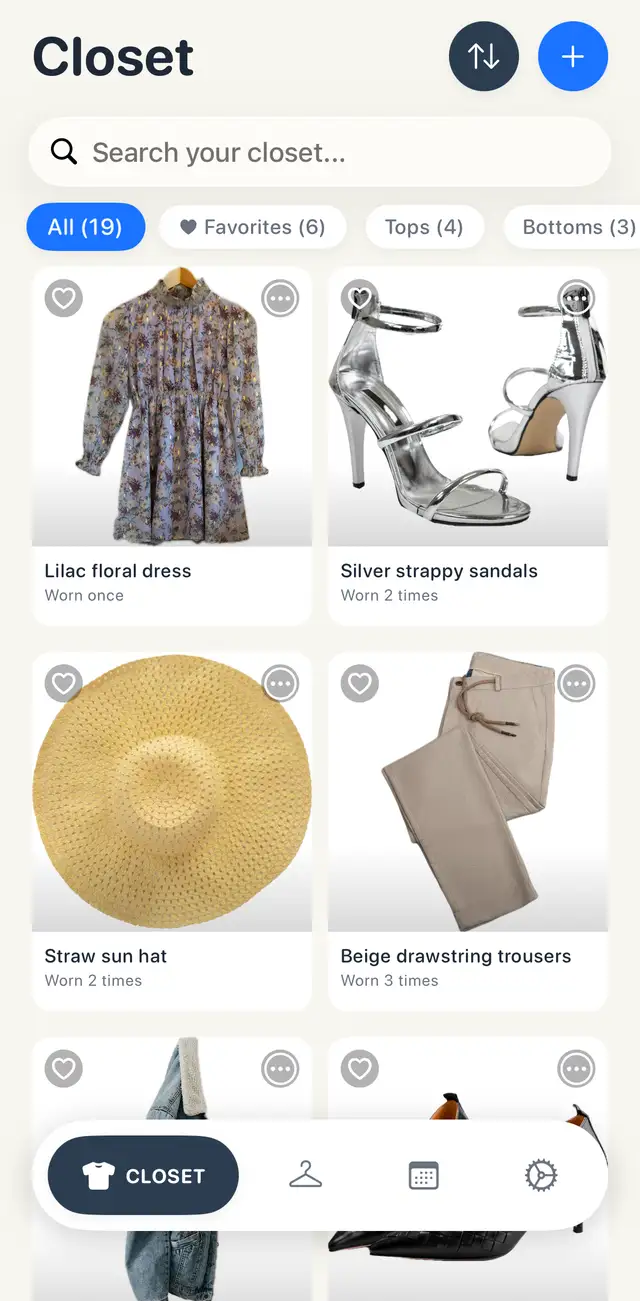
If your clothes are in a digital closet, you can skip the guessing. In Looksy, sort the Closet by Least Worn and the pieces with the fewest wears come to the top. If you have not set one up yet, our guide on how to make a digital closet shows how to photograph your clothes into one in an afternoon.
Step 2: Pick one piece and build three looks around it
Start with one piece, not the whole rail. Pick the one you would most like to wear again. In our example it is a lilac floral dress with long sleeves that has been worn once.
Now build three outfits around it, each for a different kind of day:
- A casual look. Pair it with your most-worn, most relaxed pieces: a denim jacket and white sneakers.
- A cooler-weather look. Add a sweater or a heavier jacket and boots, so the piece works in a season you would not normally wear it.
- A smarter look. A leather jacket or a blazer and your best shoes.
Two rules make this work:
- Build from your favorites. The rest of each outfit should come from the clothes you wear all the time. They already fit your life, so they pull the forgotten piece into it.
- Change the feel, not just the color. Three outfits that are all "dress plus jacket plus sneakers" are really one outfit. Aim for three that you would wear to three different places.
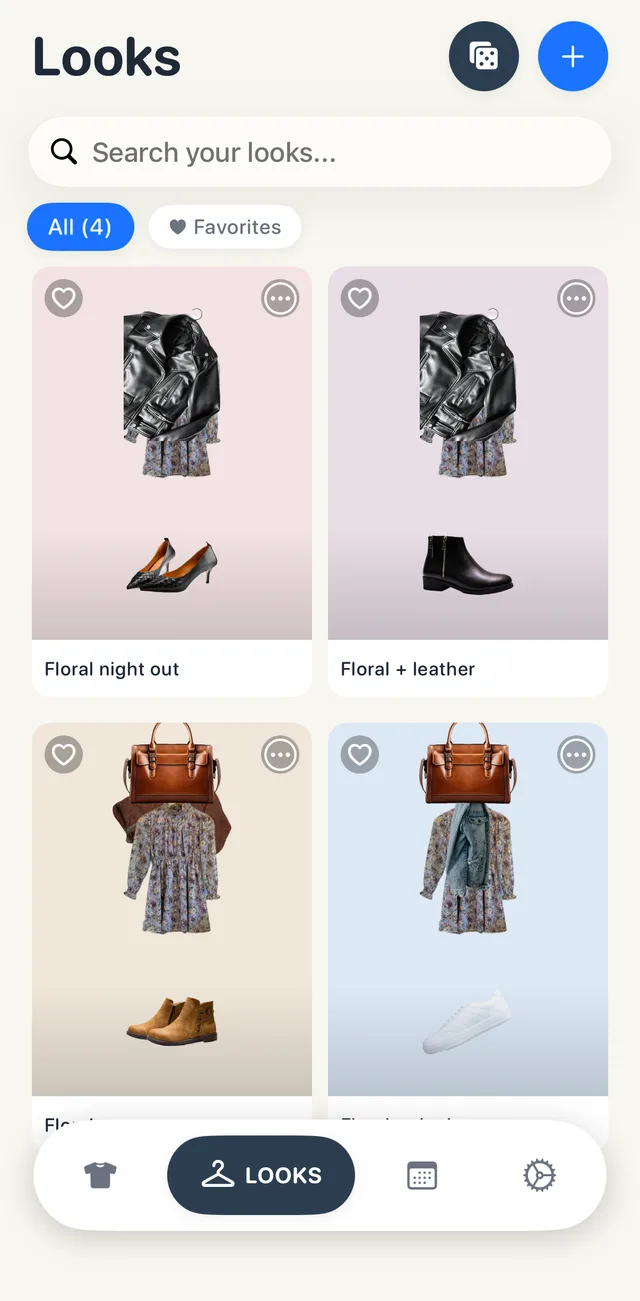
In Looksy, each outfit is a look: you pick the pieces from your closet, name the look and arrange the pieces on a canvas. Saving the three looks means you do not have to work them out again on a busy morning.
Step 3: Swap one piece at a time
Once you have three looks, get more by changing one piece at a time. Each swap is a new outfit, and it is much easier than starting from scratch.
| Start from | Swap | New outfit |
|---|---|---|
| Dress, leather jacket, ankle boots | Boots for pumps | A night out |
| Dress, denim jacket, sneakers | Sneakers for tan boots | A fall weekend |
| Dress, sweater, tan boots | Sweater for a cardigan | A softer, lighter look |
Work through the categories in order: shoes first, because they change how dressy an outfit feels more than anything else, then the outer layer, then the bag. Keep the swaps inside your own closet; if a swap needs something you do not own, skip it. The same habit makes a small bag go a long way when you travel; our guide on how to plan outfits for a trip builds a whole trip from ten pieces this way.
Step 4: Re-style with layers and accessories
The same pieces can look quite different depending on how you wear them. Before you decide a piece "does not go with anything", try a few of these:
- Layer a sweater over a dress so only the skirt shows. The dress now works like a skirt, and you can wear it with everything you would wear with a skirt.
- Wear a shirt open over a tee or a dress as a light jacket, or tie it at the waist.
- Tuck, half-tuck or knot a top. It changes the shape of the whole outfit.
- Add tights and boots to carry a summer dress or skirt into fall.
- Add a belt to a loose dress or a long cardigan to give it a waist.
- Change the bag and shoes to move an outfit from weekend to work or from day to evening.
- Push up the sleeves, roll the hem of jeans, or turn up a collar.
Do this in front of a mirror, and take a photo of anything that works. A look you can see is a look you will remember to wear.
Step 5: Let a shuffle find combinations you would not try
Even with a method, everyone falls back on the same pairings. A random mix of your own pieces breaks the habit, because it puts together things you would not have put next to each other.
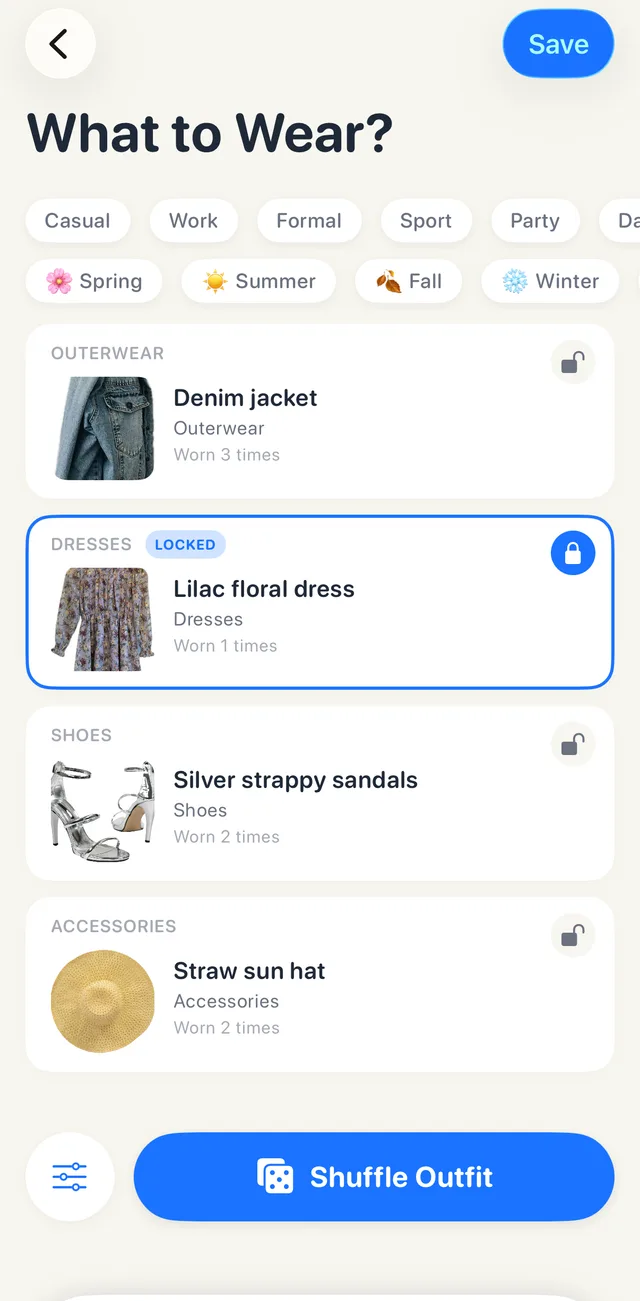
Looksy's What to Wear? screen (on the Looks tab) does this with your closet:
- It shows one slot for each category you have items in, such as dresses, outerwear, shoes and accessories.
- Tap Shuffle Outfit and every unlocked slot gets a different piece. The pick is random but weighted toward the pieces you have worn least in that category, and pieces you wore in the last three days are less likely to come up. Your favorites can still appear; they are just less likely.
- Lock the pieces you want to keep. To build around your forgotten piece, swipe through its slot to pick it and lock it, then shuffle the rest.
- Filter by occasion and season so the mix suits the day. Items marked as all season are included in any season filter.
- Hide a slot you do not need: swipe it away, or use the customize button. When you build around a dress, hide tops and bottoms.
- Tap Save to turn the result into a look.
The shuffle is part of the free version. Saved looks count toward the free plan's 20 looks.
Step 6: Wear the new outfits and keep count
An outfit only counts once you have worn it out of the house. Put one of your new looks on the plan for the next few days, wear it, and notice how it feels. Did you like it all day? Did you have to change your shoes at lunch?
Plan them like any other outfit. Our guide on how to plan outfits for the week has a 15-minute Sunday routine; in Looksy you add looks to dates on the Calendar tab (the free plan lets you schedule up to 3 days ahead). When you wear a look, tap Mark as Worn on it and every piece in it gets a wear counted. Over a few weeks the forgotten pieces climb up from the bottom of the least-worn list, and the shuffle starts suggesting other pieces instead.
Then go back to the rail and pick the next piece.
When a piece still does not work
Some pieces will not turn into outfits, however you style them. If you have tried three looks and a few swaps and you still do not want to wear it, that is useful to know. Check whether a repair or tailoring would fix it. If not, pass it on to someone who will wear it, through a friend, a resale app or a donation.
Do not buy something new just to make one forgotten piece work, unless that one new piece would also go with several things you already wear.
A one-month shop-your-closet plan
If you like a bit of structure, try this for a month:
- Week 1: pull out your skipped pieces and pick three to work on.
- Week 2: build three looks around each of them and wear at least one.
- Week 3: do the swaps and re-styling for your favorites, and shuffle for new ideas.
- Week 4: wear the best new outfits again, and decide what to do with any piece that still does not work.
Do not buy any clothes during the month. When it is over, you will have a set of new outfits, a clearer idea of what you actually like to wear, and a short list of what to pass on.
Looksy is free for up to 50 items and 20 looks, enough for your everyday clothes and the outfits you build from your forgotten pieces.
Looksy: digital closet and outfit planner
Snap your clothes into a digital closet, put together looks, plan what to wear on a calendar, and see what you actually wear. Free for up to 50 items.

Common questions
What does it mean to shop your closet?
It means looking for new outfits in clothes you already own instead of buying new ones. You pull out pieces you rarely wear and make new combinations with them, using your favorite basics, swaps, layers and accessories.
How do I make new outfits with the clothes I have?
Start from one piece you rarely wear. Build three looks around it for different kinds of days, then change one piece at a time (shoes, jacket, bag) to get more. Layering and accessories change the feel of the same pieces again.
How do I mix and match clothes I already own?
Pair each rarely worn piece with your most-worn basics, since those already go with your life. Swap shoes first, then outer layers, then bags. A random shuffle of your own clothes, such as Looksy's What to Wear?, helps you try combinations you would not have thought of.
Is there an app to make outfits from my own closet?
Looksy lets you photograph your clothes into a digital closet, build looks from them, and shuffle an outfit from your closet that leans toward the pieces you have worn least. You can lock pieces, filter by occasion and season, and save the result as a look. It is free for up to 50 items and 20 looks.
Does Looksy's shuffle use AI?
No. It picks one piece per category at random from your own closet, with the odds weighted toward the pieces you have worn least and away from pieces you wore in the last three days.